
Originally published on HMS Consultants · By Akhil Dave · Last updated: 6 November 2026
Knowing–Doing Framework™: Turning Knowledge Into Impact
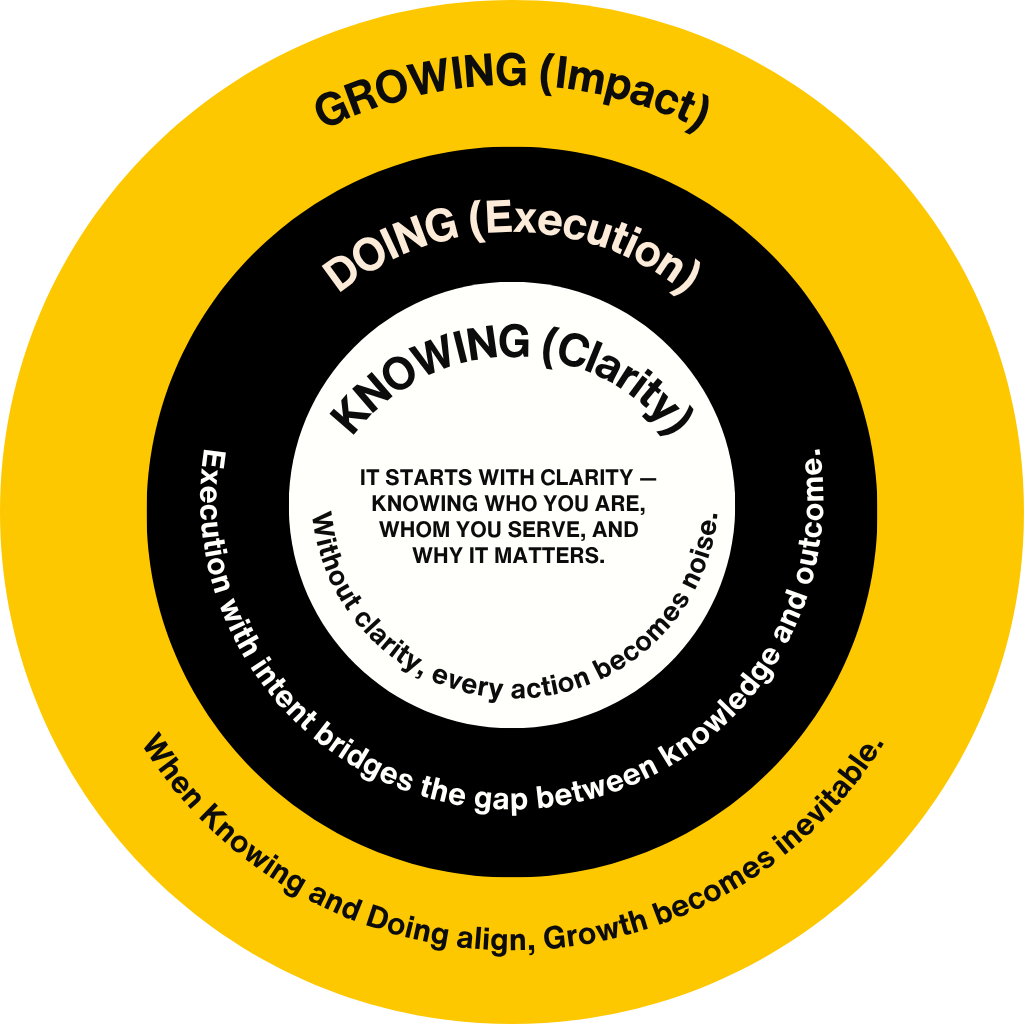
The Knowing–Doing Framework™ is a practical, three-layer operating system for healthcare marketing, created by Akhil Dave: Knowing (clarity), Doing (execution) and Growing (impact). It works for a single-doctor clinic and for a multi-speciality network.
The Story: How Akhil Dave Arrived Here
For 25 years, Akhil has been working and learning with hospitals, clinics, and health-tech founders across India. He noticed a repeating pattern:
- Some teams had great knowledge but didn’t execute consistently.
- Others were busy executing but without clarity, their actions became… noise.
After hundreds of campaigns, brand launches, and strategy interventions, one insight crystallised:
Knowing is Knowing. Doing is Doing™
Knowledge inspires. Action transforms.
From this belief came a simple, teachable, repeatable model that any healthcare organisation can apply, from a single-doctor clinic to a multi-speciality network: The Knowing–Doing Framework™.
What is the Knowing–Doing Framework™?
A practical, three-layer operating system for healthcare marketing:
- Knowing (Clarity): Define who you are, whom you serve, and why it matters before you spend a rupee.
- Doing (Execution): Run aligned activities online + offline with a clear roadmap, timelines, and owners.
- Growing (Impact): Measure what matters, learn, and scale what works to build trust, footfall, and revenue.
The Three Layers Explained
A) KNOWING: Clarity Before Action
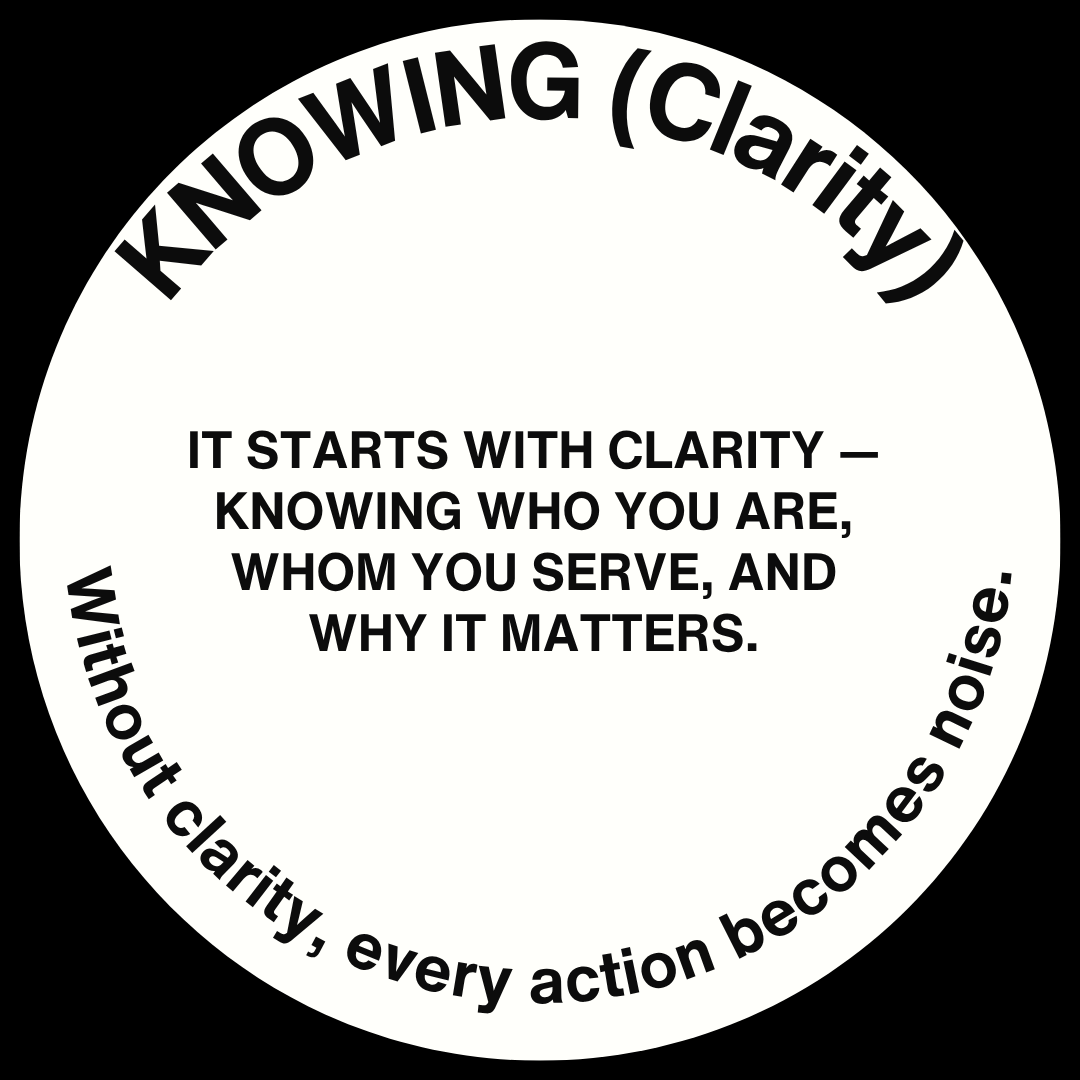
Without clarity, activity becomes noise. In healthcare, “Knowing” means:
- Brand Persona: Values, tone, uniqueness, visual identity, promise.
- Doctor vs Clinic Branding: Solo practice? Lead with doctor brand. Scaling multi-center? Build a clinic brand. Often, do both (Indian context).
- Customer Persona & Empathy Map: Demographics, needs, fears, motivations, “day in the life,” and decision triggers.
B) DOING: Strategy in Motion
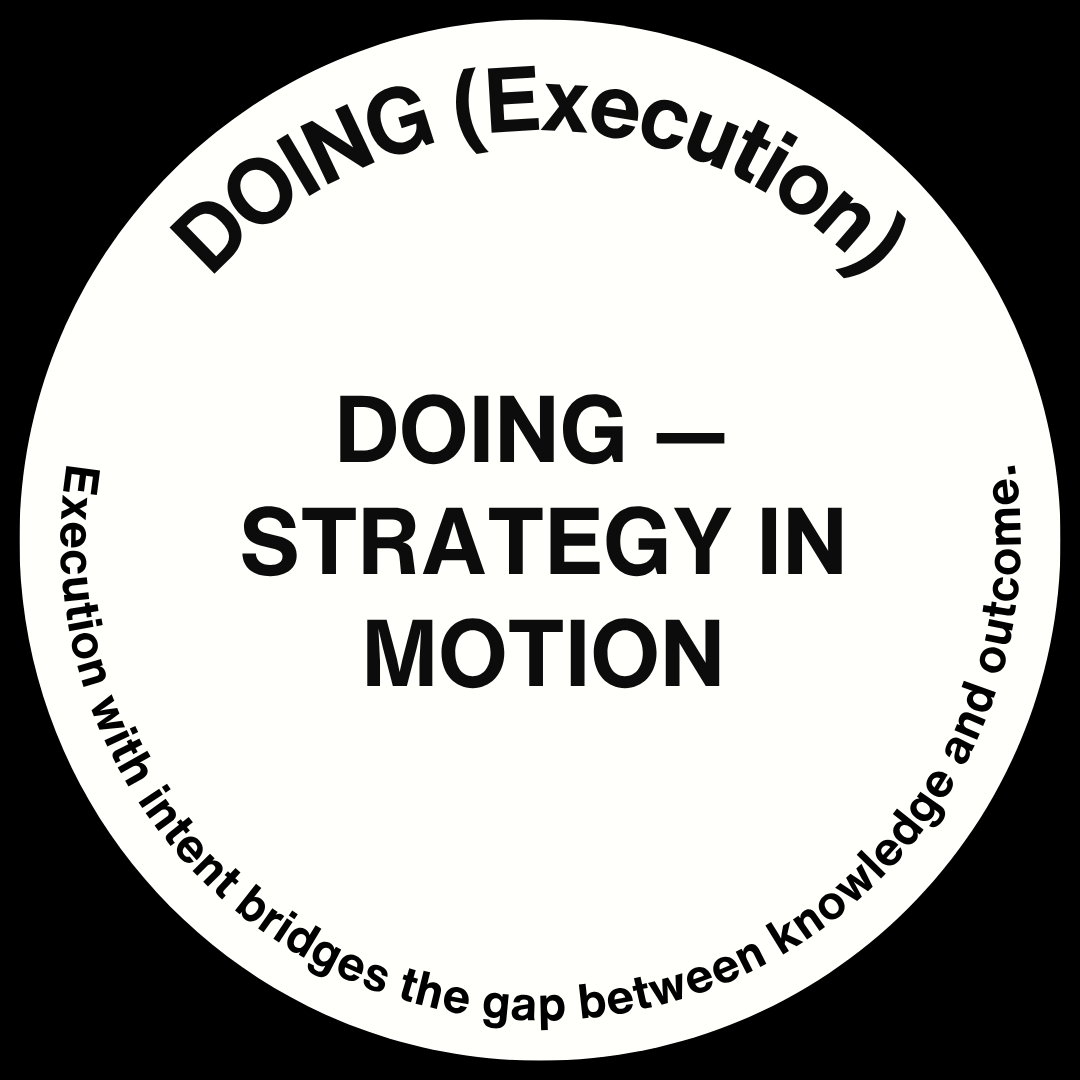
Execution turns clarity into momentum. In healthcare, “Doing” is an orchestrated mix of offline + online + content + systems.
Your Core Execution Pillars
1. Roadmap & Goals:
- Vision → 12-month goals → quarterly OKRs → monthly activities.
2. Channel Mix:
- Offline (≈40% budget): Community programs, OPD camps, referral networks, PR, doctor talks.
- Online (≈40%): Website, SEO/AEO, Google Business Profile (GMB), reviews, social/content, paid acquisition.
- Content (≈10%): Video explainers, procedure pages, FAQs, patient education assets.
- Tools/CRM/Admin (≈10%): CRM, WhatsApp Business, HMIS, analytics, dashboards.
3. AEO (Answer Engine Optimisation):
- Build “doctor-answer” pages for common questions, with FAQs, author bio, and visuals: short, factual, bilingual where relevant.
4. WhatsApp Journeys:
- Verified profile, appointment flows, reminders, follow-ups, review nudges (with consent).
5. Review Flywheel:
- QR at discharge + 24–48h WhatsApp prompt → respond to every review → showcase real stories (with consent).
6. Front Desk Excellence:
- Scripted greetings, tone training, response SLAs: first impression = brand.
Outcome: A prioritised 90-day activity plan, owners, timelines, and KPIs.
C) GROWING: Impact, Trust, Scale
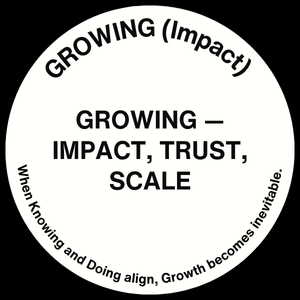
When Knowing and Doing align, growth compounds:
- Visibility: Higher local discovery (GMB calls, directions), organic traffic, citations.
- Trust: Better ratings, consistent responses, patient stories.
- Footfall & Revenue: Improved show-up rates, procedure mix, average revenue per patient.
- Scale: From one specialty/geography to many without losing your brand promise.
Outcome: A quarterly Scale Plan: expand services, deepen geography, or launch new formats (satellite OPDs, tele-consults, collaborations).
The Healthcare-Specific Playbook (Step-by-Step)
Step 1: Build Your Clarity Brief (Knowing)
- Brand persona, promise, & visual basics
- Customer personas & empathy maps (primary/secondary)
- Competition table (services, pricing, strengths)
- Positioning statement + Minimal Viable Audience
- Compliance guardrails (claims, visuals, patient consent)
Step 2: Stand-Up the Foundations (Doing)
- Website: fast, mobile-first, structured (service pages with FAQs/How-To), clear author bios.
- GMB: accurate categories, services, photos, weekly updates, Q&A.
- Content Engine: 20–30 “doctor answers,” 12 short videos, 2–4 blogs/month, Hindi + local language summaries.
- WhatsApp: opt-in flows, appointment automation, reminder templates, post-visit care nudges.
- Review System: QR + automated prompts + response SOPs.
- Source Tracking: HMIS/CRM tags for Google, GMB, WhatsApp, referral, walk-in, paid.
Step 3: Run the Mix (Doing)
- Offline: local talks, camps, referral meets, community tie-ups.
- Online: local SEO/AEO, social posts, short videos, limited paid (focused on top 3 services).
- Nurture: post-visit education, follow-up reminders, preventive checklists.
- Front Desk: greeting → triage → handoff → follow-up scripts; weekly huddles.
Step 4: Review & Scale (Growing)
- Monthly KPI review; kill what’s not working, double-down on winners.
- Add new service pages, expand languages, and refine WhatsApp journeys.
- Plan quarterly “signature campaigns” (prevention month, women’s health week, etc.).
The 90-Day Implementation Plan
Days 0–15 (Foundation)
- Clarity Brief finalised
- Website audit + GMB revamp
- WhatsApp Business setup + consent plan
- Review QR + response SOP
- Dashboard skeleton (source, CPL, reviews, revenue)
Days 16–45 (Content & Journeys)
- 10 doctor-answer pages live (+ FAQs, author bios)
- 6–8 short videos (60–120s explainers)
- WhatsApp flows: enquiry → appointment → reminder → review → follow-up
- Front desk training (tone, scripts, SLAs)
Days 46–90 (Scale & Optimise)
- 10–15 more doctor-answers + 2 blogs/month
- Small paid test on top 3 services (tight targeting)
- Local outreach: 2 community events + 1 referral meet
- Monthly KPI review → iterate
Budgeting & Prioritization
Stage-wise guideline (typical ranges)
- New startup (metro): 20–25% of expected revenue
- New startup (semi-urban/rural): 10–15%
- Existing practice, low footfall: 8–15%
- Established in a competitive market: 5–10%
- Super-speciality with institutional backing: 5–7%
Effort vs Impact Map
- Prioritise High Impact / Low Effort (GMB cleanup, doctor-answers, review SOP)
- Plan High Impact / High Effort (videos, referral ecosystem)
- Defer Low Impact / High Effort (nice-to-have campaigns)
Tech Stack & Tools (examples, not endorsements)
- AEO/Content: ChatGPT, Claude/Gemini for drafts → human-edited; GA4, Search Console
- Design/Video: Canva, CapCut, Runway/Pika for motion
- WhatsApp Automation: Interakt, Gupshup, WATI (with opt-in, consent)
- CRM/Engagement: Zoho CRM, LeadSquared, WebEngage/MoEngage
- HMIS/EMR: Any reliable system you use; ensure source tagging and reminder capability
Measurement: Your Monthly “Marketing Vitals”
- Demand: GMB actions (calls, directions), website sessions, WhatsApp chats started
- Efficiency: Cost per booked appointment (not just leads), paid vs organic share
- Conversion: show-up rate, time-to-first-response, call answer rate
- Trust: review volume & rating, response rate, patient stories published (with consent)
- Revenue: ARPNP (avg revenue per new patient), procedure mix, re-visits
- AEO Footprint: number of pages that win featured/answer placements; citations earned
Common Mistakes to Avoid
- Random activity ≠ strategy.
- Over-reliance on ads without owned content and reviews.
- Ignoring front desk training: tone, empathy, speed.
- No source tracking → can’t prove ROI.
- No consent or sloppy privacy practices in patient communication.
Conclusion
If you want to implement the Knowing–Doing Framework™ in your hospital or clinic end-to-end, from clarity brief to content engine, WhatsApp journeys, and monthly dashboards, write to info@hmsconsultants.in with the subject “Knowing–Doing Framework – Implementation”. We’ll share a short readiness checklist and a 30-minute discovery format.
Work with Akhil
Let’s Do ItTalk to The White Shirt Man